AI Case Study: Legal work has always been slow, expensive, and risky.
Banks handle millions of contracts — loan agreements, NDAs, credit agreements, compliance documents, and regulatory filings. Each document must be read carefully. One missed clause can mean millions in losses or regulatory penalties.
This is exactly the kind of problem artificial intelligence was built to solve.
Among enterprise-level ai case studies, JP Morgan’s COIN (Contract Intelligence) platform stands out as one of the most impactful artificial intelligence case studies in legal automation, financial compliance, and operational efficiency.
This blog is a deep, data-driven ai case study of how JP Morgan revolutionized legal document analysis using AI — and what it teaches other industries.

Why Legal Document Analysis Is One of the Hardest Enterprise Problems
Legal documents are not simple text.
They are:
- unstructured
- long and complex
- written in dense legal language
- filled with edge cases
- inconsistent across jurisdictions
For banks, this creates serious risks:
- missed obligations
- incorrect interpretations
- regulatory violations
- delayed deal execution
- massive legal costs
This complexity makes legal automation one of the most valuable ai case studies in enterprise AI.
The Scale of the Problem at JP Morgan
JP Morgan processes:
- hundreds of thousands of contracts annually
- across loans, credit lines, and derivatives
- involving multiple legal systems
- under strict regulatory scrutiny
Before AI:
- lawyers manually reviewed contracts
- reviews took hours per document
- fatigue increased error rates
- scaling meant hiring more lawyers
JP Morgan needed a solution that was:
- faster
- more accurate
- scalable
- auditable
Thus began one of the most cited ai case studies in financial services.
Traditional Legal Review vs AI-Driven Review
Traditional Review
- manual reading
- keyword searches
- human judgment under time pressure
- high variability between reviewers
- slow turnaround
AI-Driven Review (COIN)
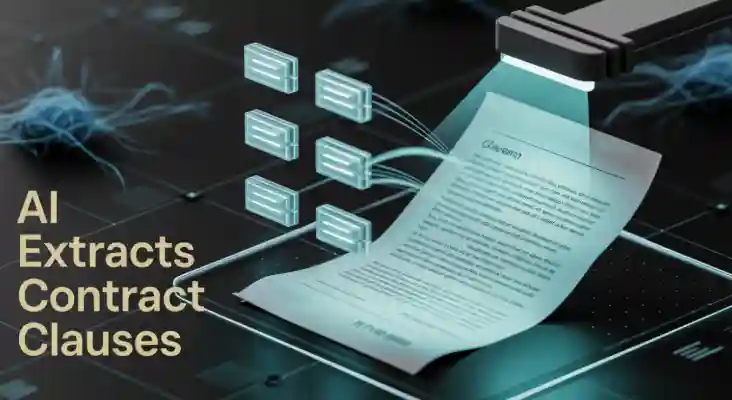
- automated clause extraction
- pattern recognition across documents
- consistent interpretation
- near-instant processing
- continuous improvement
This shift marks a defining moment in artificial intelligence case study history for legal operations.

What Is COIN (Contract Intelligence)?
COIN is JP Morgan’s internal AI system designed to:
- read legal contracts
- understand clauses
- extract critical terms
- flag risks and obligations
- standardize interpretation
It is not a simple rules engine.
COIN is a machine learning + NLP system trained on:
- thousands of historical contracts
- legal annotations
- expert-validated interpretations
This makes COIN a textbook ai case study in applied natural language processing.

How COIN Works: Deep Technical Overview
1. Document Ingestion
COIN ingests:
- PDFs
- Word files
- scanned documents (via OCR)
Documents are normalized and segmented into sections.
2. Natural Language Processing (NLP)
COIN uses NLP models to:
- tokenize legal language
- understand sentence structure
- detect semantic meaning
- identify clause boundaries
Legal language is highly contextual. COIN is trained to understand meaning, not just keywords.
3. Clause Identification & Classification
AI models identify clauses such as:
- payment obligations
- termination rights
- default conditions
- collateral requirements
- covenants
- regulatory language
Each clause is:
- labeled
- classified
- mapped to structured data
This structured output is the core value of this ai case study.

4. Risk Detection & Anomaly Identification
COIN compares clauses against:
- standard templates
- historical norms
- policy thresholds
It flags:
- missing clauses
- unusual terms
- risky deviations
- non-compliant language
5. Human Validation Loop
Lawyers do not disappear.
Instead:
- AI pre-reviews documents
- lawyers validate flagged sections
- feedback retrains the model
This human-in-the-loop design is critical to trust and adoption.
Speed, Accuracy, and Error Reduction
Time Savings
Before COIN:
- legal review could take 360,000+ hours annually
After COIN:
- the same work takes seconds to minutes
Challenges & Limitations
- continuous retraining
- expert oversight
- conservative AI decision thresholds