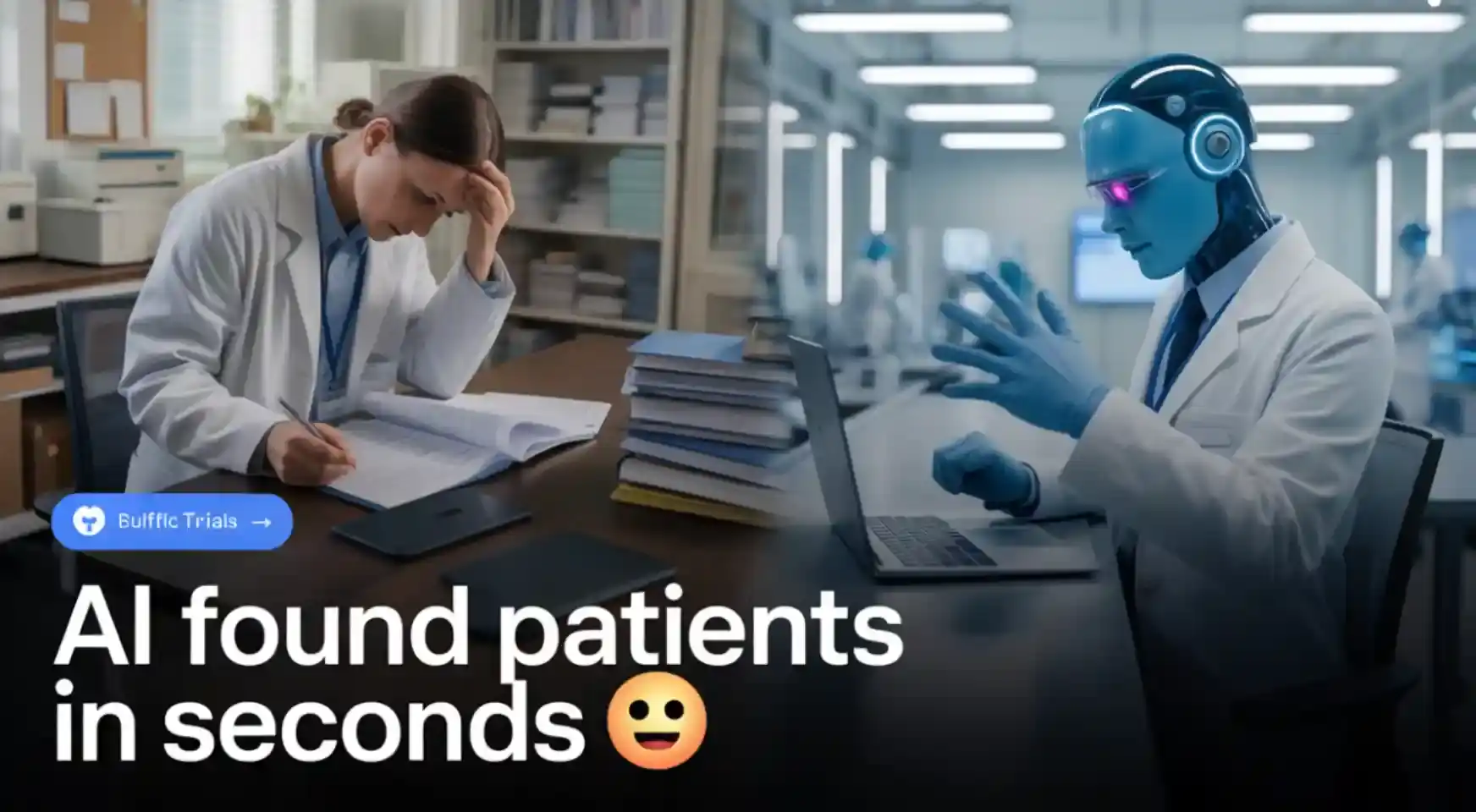
Ai case study: Clinical trials are the backbone of modern medicine.
Yet, they are slow, expensive, and fragile.
Most delays do not happen in labs.
They happen before trials even begin.
Patient recruitment is the single biggest bottleneck in clinical research.
This is exactly the kind of problem artificial intelligence was built to solve.
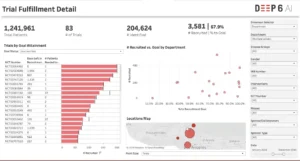
Among healthcare-focused ai case studies, Deep 6 AI stands out as one of the most practical and impactful artificial intelligence case studies in medical research operations.
This blog is a deep, data-driven ai case study of how Deep 6 AI uses AI to accelerate clinical trial recruitment — and what it teaches the healthcare industry about speed, precision, and scale.
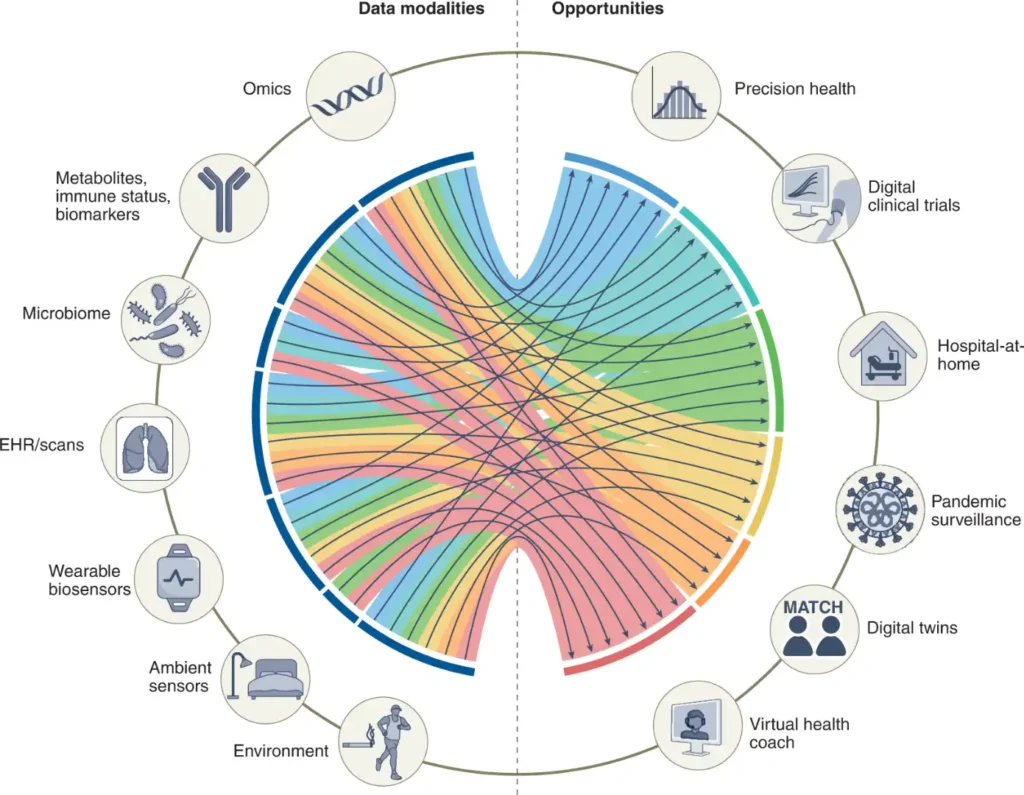
AI + Clinical Trials (Hero Visual)
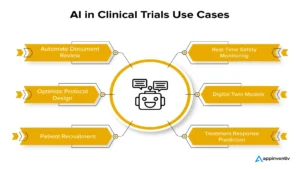
Why Clinical Trial Recruitment Is One of the Hardest Problems in Healthcare
Clinical trials fail more often due to recruitment delays than scientific flaws.
The challenges include:
- strict inclusion and exclusion criteria
- fragmented patient data
- unstructured medical records
- overloaded clinicians
- manual chart reviews
- time-sensitive enrollment windows
Even large hospitals struggle to identify eligible patients in time.
This makes patient recruitment one of the most painful and expensive challenges — and a perfect ai case study candidate.
The Scale of the Clinical Trial Problem
Across the healthcare industry:
- over 80% of trials fail to meet enrollment timelines
- delays cost millions per trial
- patients miss access to experimental therapies
- research outcomes are postponed
Before AI-driven systems:
- coordinators manually reviewed charts
- eligibility checks took weeks or months
- clinician notes were underutilized
- matching was reactive, not proactive
The system was slow by design.
Deep 6 AI’s Core Insight
Deep 6 AI approached clinical trials as a data discovery problem.
The insight was simple:
Eligible patients already exist in hospital systems — they are just hidden in data.
Deep 6 AI’s mission:
- surface those patients instantly
- match them accurately
- reduce dependency on manual chart review
This mindset places Deep 6 AI among the most operationally effective ai case studies in healthcare.
What Is Deep 6 AI?
Deep 6 AI is an AI-powered clinical intelligence platform designed to:
- analyze vast patient datasets
- interpret structured and unstructured medical data
- identify trial-eligible patients
- enable faster recruitment decisions
It does not replace clinicians.
It augments clinical research teams.
This makes it a textbook artificial intelligence case study in applied healthcare AI.
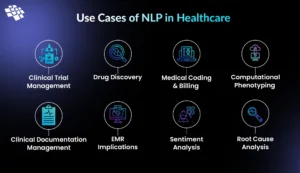
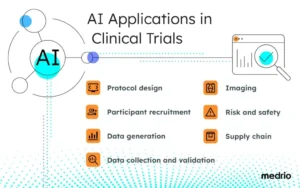
Deep 6 AI Platform Overview
How Deep 6 AI Works: A Deep Technical Breakdown
1. Data Ingestion (Clinical Data at Scale)
Deep 6 AI connects to hospital systems and ingests:
- electronic health records (EHRs)
- lab results
- diagnostic codes
- medications
- imaging reports
- physician notes
This includes both structured and unstructured data.
Most legacy systems only handle structured fields.
Deep 6 AI goes further — a key differentiator in this ai case study.
2. Natural Language Processing (NLP) on Medical Text
Unstructured data is where the value hides.
Deep 6 AI uses NLP to analyze:
- doctor’s notes
- discharge summaries
- pathology reports
- radiology impressions
AI extracts:
- conditions
- symptoms
- disease stages
- treatment history
- temporal context
This allows eligibility matching beyond checkbox data.
3. Eligibility Criteria Matching
Clinical trial criteria are complex.
They include:
- age ranges
- disease subtypes
- lab thresholds
- treatment history
- comorbidities
- time-based conditions
Deep 6 AI converts trial protocols into machine-readable logic.
AI then scans patient data to find:
- exact matches
- near matches
- potential candidates
This transforms recruitment from search to instant discovery — a defining moment in this ai case study.
4. Real-Time Querying & Cohort Discovery
Researchers can ask questions like:
- “How many patients meet criteria X today?”
- “Which patients qualify but lack one lab test?”
- “Where are eligible patients located?”
Answers arrive in seconds, not months.
This speed changes how trials are designed and executed.
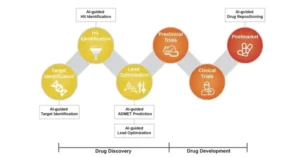
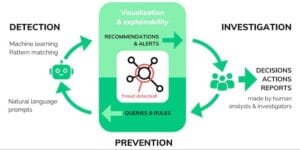
AI Matching Patients to Trials
Impact on Clinical Trial Timelines
Recruitment Speed
- weeks reduced to days
- proactive identification
- fewer stalled trials
Research Efficiency
- coordinators focus on outreach, not searching
- clinicians spend less time on paperwork
- sponsors gain visibility earlier
Patient Access
- eligible patients are found sooner
- more diverse populations are included
- fewer patients are missed
These outcomes elevate Deep 6 AI as a standout ai case study in healthcare operations.
Data Privacy & Compliance
Healthcare AI must be compliant.
Deep 6 AI is built with:
- HIPAA compliance
- secure data handling
- controlled access
- audit trails
AI operates inside hospital environments, not external data lakes.
This governance-first approach is critical for trust in any artificial intelligence case study in medicine.
Challenges & Limitations
No real-world ai case study is without constraints.
1. Data Quality
Incomplete or outdated records affect results.
2. Variability in Clinical Notes
Doctors document differently.
3. Protocol Complexity
Some criteria remain ambiguous.
4. Human Adoption
Clinicians must trust AI outputs.
Deep 6 AI addresses this through:
- explainable results
- transparent logic
- clinician-in-the-loop workflows
What This AI Case Study Teaches Healthcare and Beyond
This ai case study applies far beyond clinical trials.
Industries that can learn from this approach:
- pharmaceutical R&D
- hospital operations
- population health
- insurance analytics
- platforms discussed in ai education case studies
Core lessons:
- AI excels at finding needles in data haystacks
- Unstructured data holds massive value
- Speed changes outcomes, not just efficiency
- Human oversight builds trust
- AI unlocks data already owned
Final Thought
Deep 6 AI proves a critical point.
AI does not need to invent new data.
In this artificial intelligence case study, AI simply reveals what was already there — patients waiting to be matched with research that could change lives.
By accelerating clinical trials, Deep 6 AI is not just improving processes.
It is accelerating medical progress itself.
Internal Link Suggestions
- [Internal Link: “Read our breakdown of AlphaFold — AI’s biggest science breakthrough.”]
External Links
- [External Link: “deep 6 AI”]
Future of AI-Driven Medical Research