Ai case study: Technology has always promised empowerment.
But for millions of people with disabilities, technology often creates barriers instead of removing them.
Interfaces assume vision.
Devices assume hearing.
Software assumes memory, focus, and motor precision.
This is exactly the kind of problem artificial intelligence was built to solve.
Among large-scale ai case studies, Microsoft’s work in accessibility stands out as one of the most meaningful artificial intelligence case studies — not because it increases profit, but because it increases independence, dignity, and inclusion.
This blog is a deep, data-driven ai case study of how Microsoft is using AI to make technology accessible — and what it teaches the world about inclusive design.

Why Accessibility Is One of the Hardest Technology Problems
Accessibility is not a feature.
It is a system-level challenge.
People with disabilities face barriers across:
- visual interfaces
- audio-based interactions
- complex navigation flows
- memory-heavy software
- fine motor controls
Disabilities vary widely:
- visual impairment
- hearing loss
- speech difficulties
- cognitive overload
- learning disabilities
- mobility limitations
This diversity makes accessibility one of the most complex problems in human–computer interaction — and one of the most important ai case studies in modern technology.

The Scale of the Accessibility Challenge
Globally:
- over 1 billion people live with some form of disability
- digital tools are essential for work, education, and independence
- inaccessible technology deepens inequality
Before AI-driven accessibility tools:
- screen readers lacked context
- voice recognition failed for non-standard speech
- physical environments were invisible to blind users
- cognitive overload was ignored by software design
Microsoft recognized that accessibility could not be solved with static rules.
It required adaptive intelligence — a defining moment in this ai case study.

Microsoft’s Accessibility Vision
Microsoft treats accessibility as a core design principle, not an add-on.
The mission:
Use AI to adapt technology to humans — not force humans to adapt to technology.
This led to AI-powered tools across:
- vision
- speech
- hearing
- cognition
This makes Microsoft’s approach one of the most socially impactful ai case studies ever deployed.
Seeing AI: Visual Intelligence for the Blind
[Image Prompt: “A visually impaired person using a smartphone with the Seeing AI app, AI describing surroundings through audio, real-world environment, human-centered technology, calm and empowering mood.”]
One of Microsoft’s most important accessibility tools is Seeing AI.
Seeing AI is a mobile app that uses computer vision and AI to describe the world for visually impaired users.
Seeing AI can:
- read printed and handwritten text
- recognize people and facial expressions
- identify everyday objects
- describe scenes and surroundings
- detect currency
This turns a smartphone into a real-time visual interpreter.
For many users, this is the first time technology explains the physical world instead of hiding it.
This alone makes Seeing AI a landmark ai case study.

🔗 External Link:
https://www.microsoft.com/en-us/ai/seeing-ai
How Seeing AI Works (Technical Overview)
[Image Prompt: “Infographic-style visualization showing camera input → AI vision model → natural language audio output, accessibility-focused AI pipeline, clean minimal design.”]
1. Image Capture
The smartphone camera continuously captures the environment.
2. Computer Vision Models
AI analyzes:
- objects
- people
- spatial relationships
- text regions
3. Context Understanding
The system decides what matters and what doesn’t.
4. Natural Language Generation
Visual data is converted into spoken descriptions.
The challenge is not recognition — it is relevance.
This design philosophy defines this ai case study.
AI for Speech and Hearing Accessibility
[Image Prompt: “Real-time AI captions appearing during a video call, accessibility-focused interface, clean modern UI, inclusive workplace environment.”]
Microsoft also uses AI to support people with hearing and speech impairments.
AI-powered tools include:
- real-time speech-to-text
- live captions in meetings
- speaker identification
- noise suppression
- translation
These tools enable users to:
- participate in meetings
- attend online classes
- communicate independently
Unlike traditional captioning, AI adapts to accents, speech patterns, and noisy environments.
This adaptability strengthens Microsoft’s position as a leading ai case study in accessibility.
🔗 External Link:
https://www.microsoft.com/en-us/accessibility
AI for Cognitive Accessibility
[Image Prompt: “Minimalistic illustration showing AI simplifying a complex interface into clear steps, cognitive accessibility support, calm and supportive design.”]
Cognitive accessibility addresses invisible disabilities such as:
- ADHD
- dyslexia
- memory challenges
- learning difficulties
Microsoft uses AI to:
- simplify interfaces
- summarize content
- reduce distractions
- highlight key information
These features benefit not only people with disabilities, but everyone.
This expands the reach of this artificial intelligence case study beyond assistive technology.
Human-Centered Design + AI
A critical reason this ai case study succeeds:
Microsoft builds accessibility tools with people with disabilities, not just for them.
The process includes:
- direct user feedback
- disability advocacy collaboration
- real-world testing
- continuous iteration
AI systems are refined using lived experience.
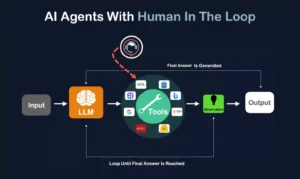
This human-in-the-loop approach mirrors best practices seen in advanced ai case studies across ethical and regulated domains.

Impact: Individual, Social, and Industry-Level
Individual Impact
- increased independence
- improved confidence
- reduced reliance on assistance
- better access to work and education
Social Impact
- inclusive digital ecosystems
- reduced digital divide
- better representation
Industry Impact
- accessibility becomes a standard
- AI is viewed as a social enabler
This makes Microsoft’s work a rare ai case study where technical excellence meets societal progress.
Challenges & Limitations
No realistic ai case study is perfect.
1. Context Errors
AI can misinterpret scenes.
2. Cultural Sensitivity
Descriptions must respect social norms.
3. Privacy Concerns
Visual and audio data must be protected.
4. Hardware Dependency
Some tools require modern devices.
Microsoft addresses these with:
- opt-in controls
- on-device processing
- privacy-first defaults
What This AI Case Study Teaches Other Industries
This ai case study applies far beyond accessibility.
Industries that can learn from Microsoft’s approach:
- education platforms
- healthcare interfaces
- public digital services
- enterprise software
- products studied in ai education case studies
Core lessons:
- AI should adapt to human diversity
- Accessibility improves usability for all
- Inclusive design scales better
- Human feedback is essential
- AI can create dignity, not just efficiency
Final Thought
Microsoft’s accessibility initiatives prove something fundamental.
AI is not just about speed or automation.
In this artificial intelligence case study, AI becomes:
- a guide
- a translator
- an equalizer
- a tool for independence
By using AI to make technology accessible, Microsoft shows what the future of AI should look like — inclusive, human-first, and empowering.
Internal Link
[Internal Link: “Read our breakdown of AlphaFold — AI’s biggest science breakthrough.”]