Ai Case Study: Farming has always been about survival.
Grow more.
Waste less.
Protect the land.
Feed more people.
But modern agriculture faces a new pressure:
- rising costs
- climate uncertainty
- chemical overuse
- soil degradation
- shrinking margins
This is exactly the kind of problem artificial intelligence was built to solve.
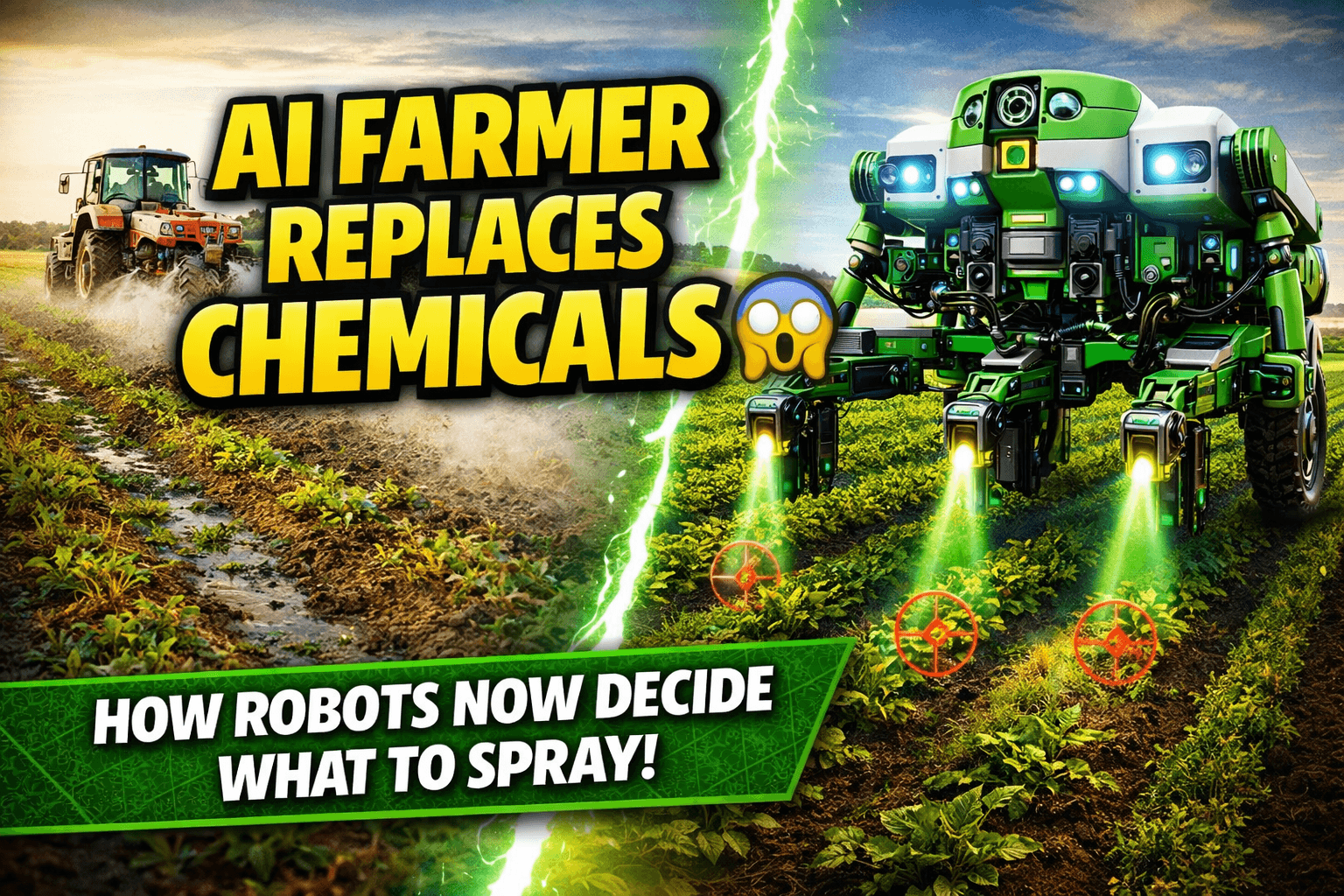
Among sustainability-focused ai case studies, Blue River Technology stands out as one of the most practical and impactful artificial intelligence case studies in the physical world.
This blog is a deep, data-driven ai case study of how Blue River Technology uses AI to bring precision to farming — and what it teaches us about the future of food.
AI in Agriculture
Why Agriculture Is One of the Hardest Optimization Problems
Farming is not a factory.
It involves:
- living organisms
- unpredictable weather
- uneven soil
- biological variability
- seasonal constraints
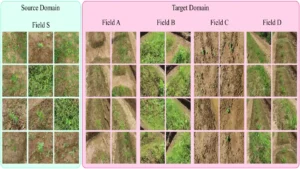
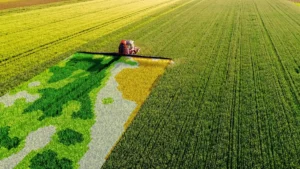
Traditional farming treats fields as uniform.
But nature is not uniform.
Every square meter differs.
This makes agriculture one of the most complex real-world systems — and a perfect ai case study domain.
Variability in Fields
The Core Problem Blue River Technology Wanted to Solve
Farmers faced a painful tradeoff:
- spray everything → waste chemicals, harm soil
- spray selectively → impossible at scale
Manual precision does not scale.
Machines lacked intelligence.
Blue River Technology reframed the problem:
“What if machines could see plants the way humans do?”
This insight became one of the most influential ai case studies in modern agriculture.
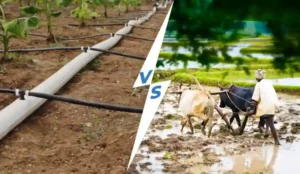
Farmer vs AI Machine
What Is Blue River Technology?
Blue River Technology builds AI-powered agricultural robots that:
- identify crops and weeds
- make real-time decisions
- apply treatment only where needed
- operate at tractor-scale speed
The most famous system, See & Spray, uses:
- computer vision
- machine learning
- edge AI processing
This is not analytics.
It is AI acting in the physical world — a defining artificial intelligence case study.
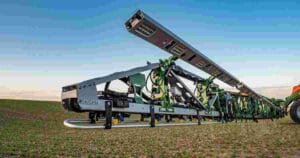
Blue River “See & Spray” System
How Blue River’s AI Works
- Cameras scan crops in real time
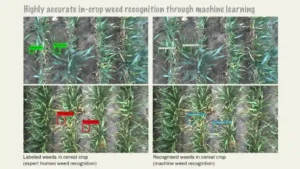
- AI models classify each plant
- The system decides: crop or weed
- Micro-sprayers activate only on weeds
- The tractor moves forward at full speed
All in milliseconds.
Every plant becomes a decision point.
This transforms farming from bulk treatment to surgical precision — a hallmark of this ai case study.
AI Identifying Weeds
Why This AI Case Study Is Different
Most ai case studies live in software.
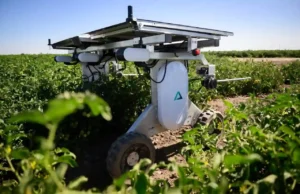
Blue River’s AI lives in:
- dust
- sunlight
- vibration
- heat
- rain
- mud
It must:
- operate at speed
- make zero-latency decisions
- never misfire
- function for hours
This is AI under real-world stress.
Mistakes cost crops.
Success changes ecosystems.
Robot in Harsh Field Conditions
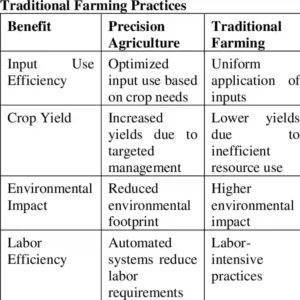
Measured Impact
Environmental
- up to 90% reduction in herbicide use
- healthier soil
- reduced runoff
Economic
- lower chemical costs
- higher crop yields
- improved margins
Operational
- no slowdown in field operations
- scalable precision
- automated decision-making
This makes Blue River one of the most environmentally significant ai case studies ever deployed.
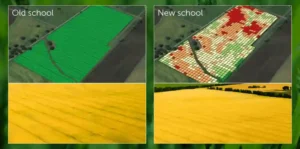
Before vs After Precision Farming
Challenges & Limitations
No real-world ai case study is without friction.
1. Visual Ambiguity
Young crops and weeds can look identical.
2. Environmental Noise
Lighting, dust, and shadows affect accuracy.
3. Model Generalization
Different crops behave differently.
4. Farmer Adoption
Trust in machines takes time.
Blue River mitigates this through:
- continuous model training
- field testing
- conservative activation thresholds
- human override options
What This AI Case Study Teaches Other Industries
This ai case study extends beyond agriculture.
Applicable domains include:
- forestry
- mining
- construction
- environmental monitoring
- logistics automation
- platforms discussed in ai education case studies
Core lessons:
- AI thrives in high-variability environments
- Precision beats scale-only approaches
- Vision-based AI can replace blanket actions
- Sustainability can be data-driven
- AI can reduce harm, not just cost
Final Thought
Blue River Technology proves something fundamental.
AI is not only about speed or profit.
In this artificial intelligence case study, AI becomes:
- a steward of land
- a protector of soil
- a precision tool for nature
- a bridge between productivity and sustainability
By teaching machines to see plants, Blue River is teaching humanity how to farm smarter.
Internal Link Suggestions
- [Internal Link: “Read our breakdown of AlphaFold — AI’s biggest science breakthrough.”]
External Links
- [External Link: “deep 6 AI”]