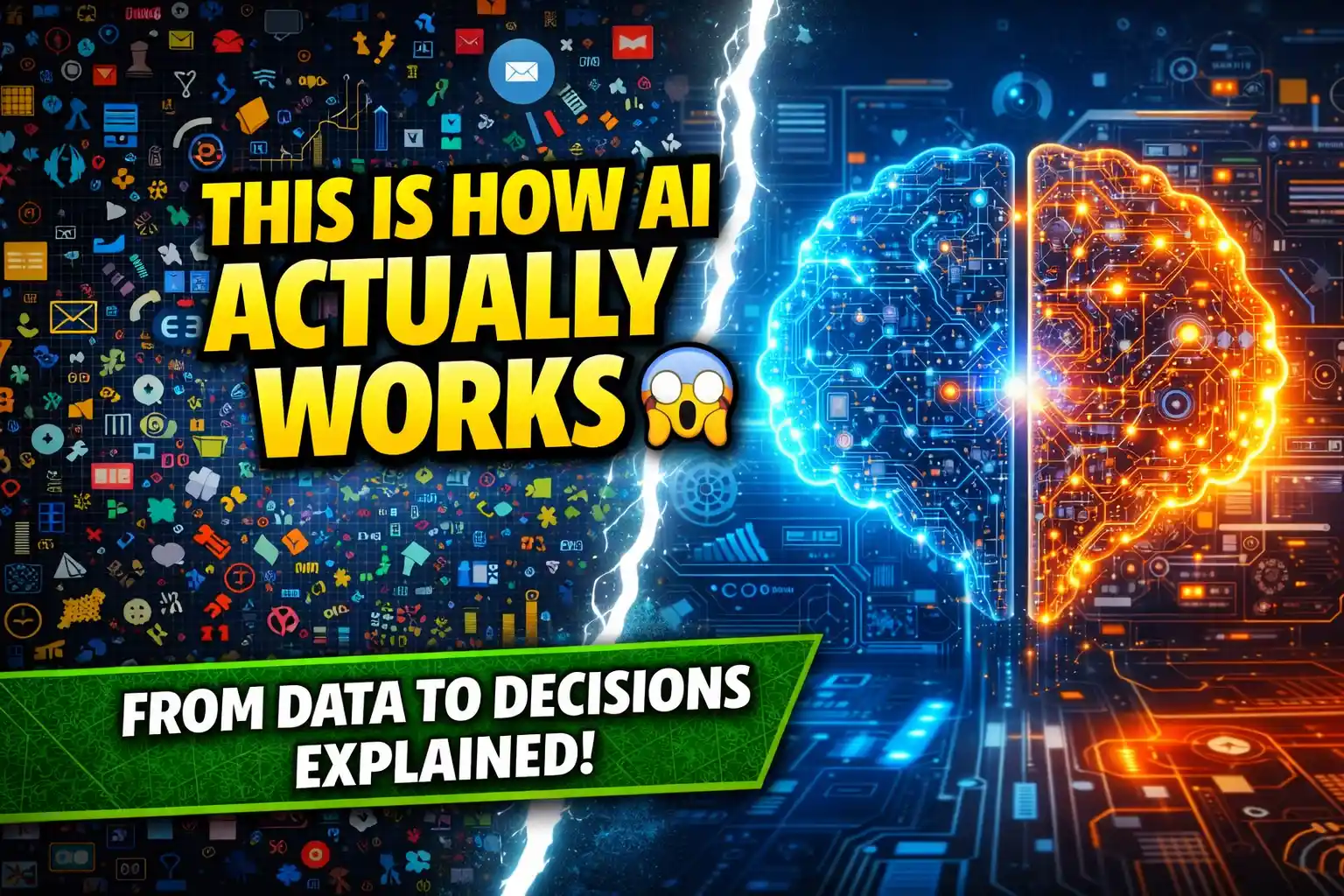
How does ai actually work? You ask a question and get an answer. You upload a photo and it gets recognized. You watch a movie and suddenly every recommendation feels personal. But behind all of this, there is no magic at all.
AI does not “think.”
AI does not “understand.”
AI does not “know.”
AI calculates patterns.
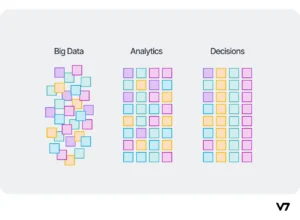
Every intelligent system you see today—whether it’s ChatGPT, Netflix, Tesla, or Google Search—runs on the same basic pipeline. Data goes in. Patterns are learned. Decisions come out. This blog explains that journey in simple, human language.
Where Everything Begins: Data
AI starts with data. Not logic. Not rules. Not intelligence.
Just raw information.
This data can be text, images, videos, voices, clicks, transactions, or sensor readings. When you watch a video on YouTube, that action becomes data. When a camera sees a road, those pixels become data. When a hospital stores patient records, that becomes data too.
On its own, this data means nothing. It is messy, inconsistent, and often full of errors. But in large volumes, it contains patterns. AI exists to find those patterns.
Without data, AI is blind.
How does ai actually work
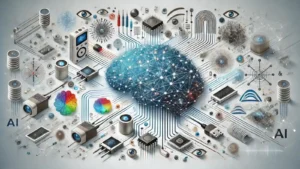
Making Data Usable
Real-world data is chaotic. It has missing values, duplicates, spelling mistakes, noise, and bias. Before an AI system can learn from it, this data must be cleaned and prepared.
For example, the words “good,” “Good!,” “gud,” and “g00d” all express the same feeling. A human understands that instantly. A machine does not. Someone has to teach the system that these are connected.
This preparation step is invisible to users, but it is one of the most important parts of AI. Most failures in AI systems happen not because the model is weak, but because the data is poor.
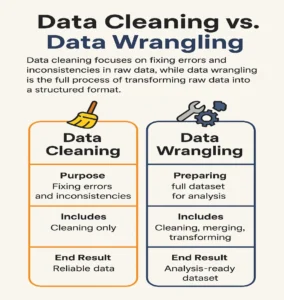
Teaching the Machine
AI is not programmed the way normal software is. Instead of writing rules, engineers show the system examples.
A simple training loop looks like this:
The system is given an input.
It makes a guess.
It is told the correct answer.
The error is measured.
Internal values are adjusted.
The process repeats millions of times.
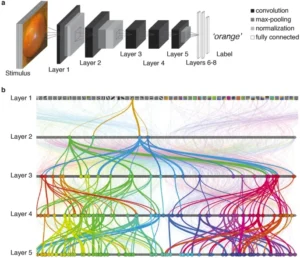
Over time, the system learns patterns. It begins to associate words with meaning, pixels with objects, and numbers with outcomes. It does not memorize facts. It learns relationships.
This is why AI feels intelligent. It is not following instructions. It is responding based on experience.

What an AI Model Really Is
How does ai actually work? After training, what remains is called a model. A model is a mathematical structure that transforms input into output.
You give it text. It predicts the next word.
You give it an image. It predicts what’s inside.
You give it behavior. It predicts intent.
A model does not store knowledge the way a book does. It stores probability relationships. That is why two AIs trained on different data behave differently. Their “worldview” comes from what they have seen.
Every AI system is shaped by its data.
When AI Meets the Real World
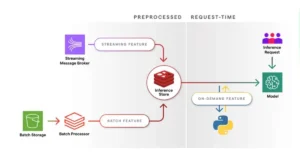
How does ai actually work? Training happens offline. Real use is called inference.
Inference is the moment you interact with AI. You type a message. You upload a photo. You make a payment. The model processes that input and produces a prediction.
This happens in milliseconds.
Is this email spam?
Is this face familiar?
Is this transaction risky?
What should be recommended next?
Every modern AI system exists to answer these kinds of questions.
Why AI Sometimes Fails
AI does not understand meaning. It understands probability.
It says, “Based on what I have seen before, this is the most likely answer.”
That works well most of the time. But it fails when:
- the data is biased
- the situation is rare
- the world changes
- the model has never seen something similar
This is why humans must stay in the loop. AI needs feedback. It needs correction. It needs retraining. Intelligence in machines is not static. It is a continuous process. How does ai actually work?
The Full Journey
Every AI system follows the same life cycle:
Data is collected.
Data is cleaned and labeled.
A model is trained.
Accuracy is tested.
The system is deployed.
Predictions are made.
Feedback is collected.
The model is improved.
This loop never ends.
AI is not a product.
It is a living pipeline.

Why This Understanding Matters
Once you understand how AI works, your perspective changes. You stop seeing it as magic and start seeing it as a mirror.
AI reflects its data.
AI amplifies patterns.
AI carries bias.
AI improves with feedback.
Every powerful system you see today runs on this exact foundation. Different industries. Same engine. How does ai actually work?
Final Thought
Artificial intelligence is not mysterious. It is mechanical.
It turns data into patterns.
Patterns into models.
Models into predictions.
Predictions into decisions.
That is the entire journey.
So the real question is no longer, “What can AI do?”
It is, “What data is it learning from?”
Because in every intelligent system, the data decides the future. How does ai actually work?
See more >>> Zara AI breakthrough