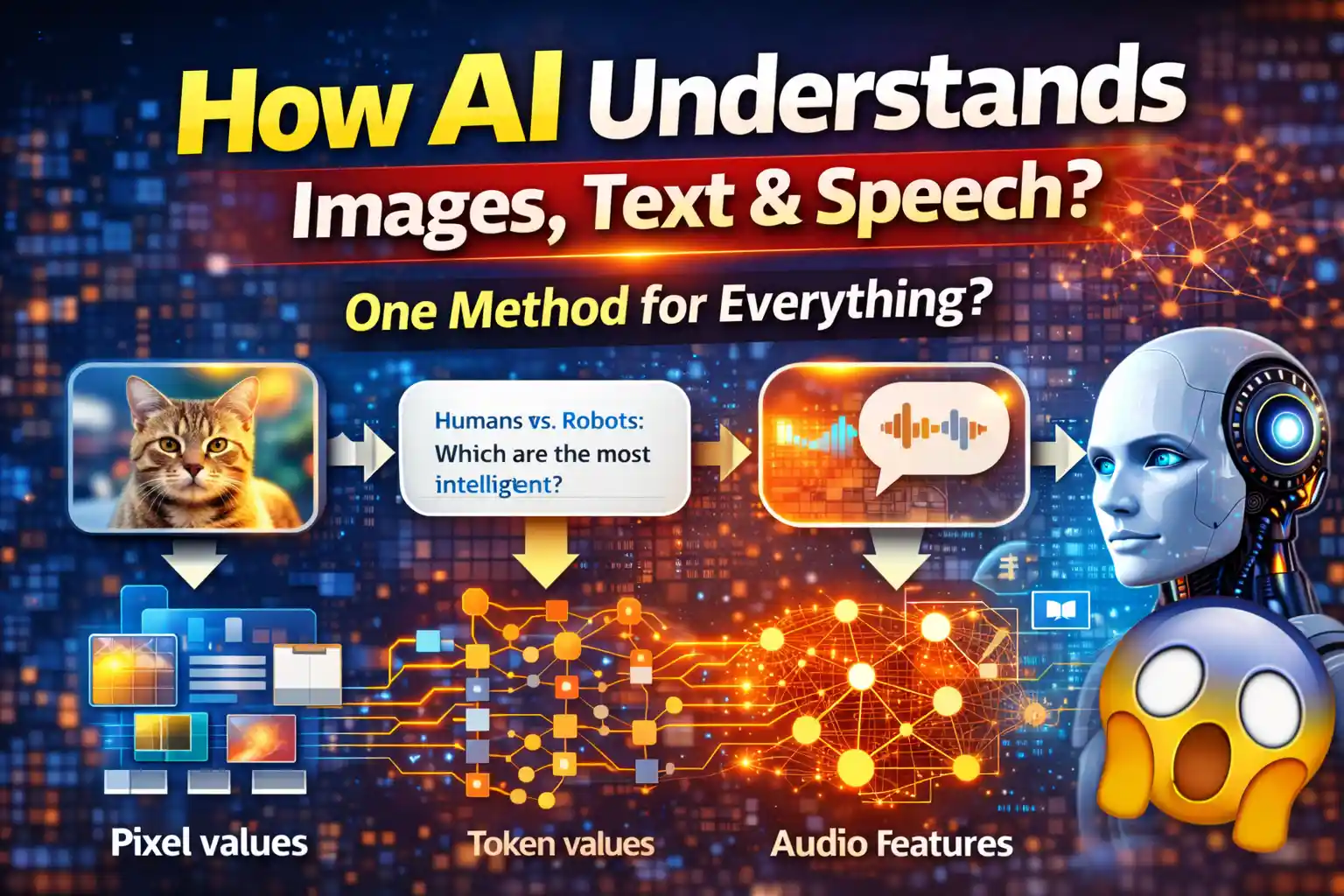
How AI Understands Images: At first glance, it feels almost unbelievable.
- AI can read text and answer questions
- It can see images and describe what’s inside
- It can hear speech and respond like a human
These abilities seem very different.
But under the hood, AI understands images, text, and speech in a surprisingly similar way.
This article explains that unified idea—clearly, step by step.
The Core Truth: AI Does Not “Understand” Like Humans
Before going deeper, one important clarification:
AI does not understand meaning the way humans do.
AI:
- Does not see images as pictures
- Does not hear speech as sound
- Does not read text as language
Instead, AI converts everything into numbers and learns patterns from those numbers.
This single idea connects all AI perception. How AI Understands Images.
Step 1: Everything Becomes Data
No matter the input type, the first step is always the same.
Images become:
- Pixel values (numbers representing color and brightness)
Text becomes:
- Tokens (numbers representing words, subwords, or characters)
Speech becomes:
- Waveforms and frequency patterns (numbers over time)
To AI:
An image, a sentence, and a voice clip are all just structured numerical data.
Step 2: Feature Extraction – Finding Patterns
Raw numbers alone are useless.
AI systems use specialized models to extract meaningful patterns, called features.
For images:
- Edges
- Shapes
- Textures
- Object parts
For text:
- Word relationships
- Grammar patterns
- Context
- Semantic similarity
For speech:
- Pitch
- Tone
- Phonemes
- Timing patterns
This step answers the question:
“What important signals exist inside this data?” How AI Understands Images.
Step 3: Neural Networks – The Shared Brain
The same fundamental structure powers all three domains:
neural networks.
Although designs vary, the principle is identical:
- Input → layers of transformation → output
Why neural networks work across all formats:
- They learn hierarchical patterns
- They improve through feedback
- They scale with data and compute
This is why modern AI feels unified rather than fragmented.
How AI Understands Images
AI vision systems use models that specialize in spatial patterns.
The process:
- Image pixels are fed into the model
- Early layers detect edges and colors
- Deeper layers recognize objects
- Final layers classify or describe the image
The AI never sees a “cat” or “car”.
It recognizes statistical patterns associated with those labels. How AI Understands Images.
How AI Understands Text
Text understanding relies on learning relationships between tokens.
The process:
- Text is broken into tokens
- Tokens are converted into numerical vectors
- The model learns context and meaning through patterns
- Output is prediction-based (next word, answer, summary)
AI does not know grammar rules explicitly.
It learns them by observing billions of examples.
How AI Understands Speech
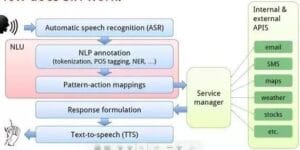
Speech is more complex because it is continuous and time-based.
The process:
- Audio waves are converted into frequency data
- Patterns like phonemes are detected
- These patterns are mapped to text-like representations
- Higher-level models process meaning
In modern systems:
Speech → text → understanding → response
This is why speech AI often shares architecture with text AI.
The Unifying Principle: Pattern Prediction
At the deepest level, all modern AI perception works by predicting patterns.
- In images → predicting object labels
- In text → predicting the next token
- In speech → predicting sound-to-language mappings
AI intelligence emerges not from understanding meaning, but from accurate prediction at scale.
Multimodal AI: When Everything Comes Together
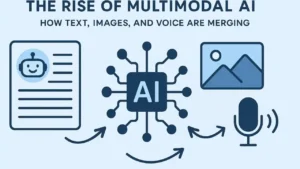
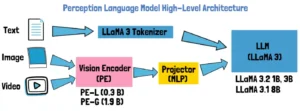
The most advanced AI systems today are multimodal.
They can:
- Read text
- See images
- Hear speech
- Combine all three
Why this matters:
- Images give context to text
- Speech adds emotion and intent
- Text provides structure and logic
Multimodal models treat all inputs as different views of the same underlying reality. How AI Understands Images.
Why This Unified View Is Important
Understanding this helps us:
- Avoid unrealistic expectations of AI
- Design better human–AI interaction
- Reduce fear and misinformation
- Build systems responsibly
AI is powerful—but it is not conscious, emotional, or aware.
Key Takeaway
AI understands images, text, and speech not as humans do, but through a shared mathematical framework:
Data → Patterns → Prediction → Output
Different inputs.
Same underlying intelligence engine.
Once you see this unity, AI stops feeling mysterious—and starts feeling understandable.
See more >>> Zara AI breakthrough >>> Netflix AI