Ai Case Study: Personalization has become the most powerful differentiator in modern retail.
In an era where consumers expect brands to “know them,” generic recommendations no longer work. Customers want clothing that matches their body type, lifestyle, taste, and confidence level — not just what’s trending.
This is where Stitch Fix built one of the most fascinating ai case studies in retail.
This artificial intelligence case study explores how Stitch Fix blends machine learning with human judgment to create deeply personalized fashion experiences — and why this hybrid model drives loyalty, satisfaction, and long-term business growth.
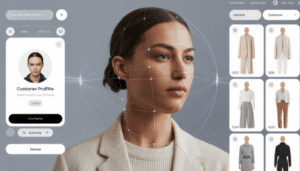
Why Personalization Is Extremely Difficult in Fashion
Fashion is emotional, subjective, and personal.
Unlike movies or music, clothing must:
- fit physically
- match identity
- align with confidence
- suit lifestyle and occasions
- evolve with mood and age
Two people can like the same dress — but for completely different reasons.
This makes fashion personalization far more complex than most ai case studies in retail.
Stitch Fix understood early that:
Pure automation would fail — and pure human styling wouldn’t scale.
They needed a new model.
The Core Problem Stitch Fix Wanted to Solve
Stitch Fix aimed to answer one question:
“How do we style millions of people individually — without becoming generic?”
The company faced several challenges:
- customers hate browsing endlessly
- returns are expensive
- wrong recommendations reduce trust
- stylists alone can’t scale to millions
- algorithms alone lack human intuition
This made Stitch Fix’s challenge ideal for an artificial intelligence case study built around collaboration, not replacement.
Why Traditional Fashion Retail Personalization Fails
Rule-Based Recommendations
- “People also bought…”
- based on popularity, not identity
- ignores fit, lifestyle, and confidence
Trend-Driven Curation
- pushes what’s trending
- ignores personal taste
- creates sameness
Human-Only Styling
- expensive
- inconsistent
- not scalable
- limited data memory
Stitch Fix realized that data + AI + humans was the only viable path.
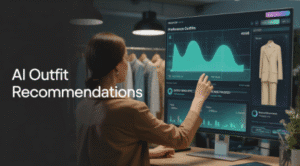
Stitch Fix’s AI-First Personalization Strategy
Stitch Fix built an end-to-end AI personalization engine that supports every decision — from styling to inventory planning.
This includes:
- recommendation systems
- fit prediction models
- preference learning algorithms
- demand forecasting
- pricing optimization
- feedback analysis
This makes Stitch Fix one of the most academically studied ai case studies in fashion and one of the most cited ai education case studies in data science programs.
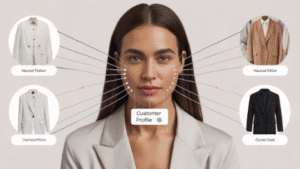
The Data That Powers Stitch Fix
Stitch Fix’s AI systems learn from an enormous variety of inputs:
Customer-Provided Data
- style quizzes
- fit preferences
- size and body shape
- budget range
- color dislikes
- lifestyle info (work, casual, events)
Behavioral Data
- items kept vs returned
- time spent reviewing items
- written feedback
- rating patterns
- request notes to stylists
Product Data
- fabric type
- cut and silhouette
- stretchability
- brand sizing inconsistencies
- seasonality
AI connects all these layers into a living customer profile.
How Stitch Fix’s Algorithms Work (Deep Dive)
This ai case study is built on multiple models working together.
1. Preference Learning Models
These models learn what a customer likes over time, even when preferences change.
They detect:
- emerging style shifts
- boredom with certain silhouettes
- budget sensitivity changes
- color fatigue
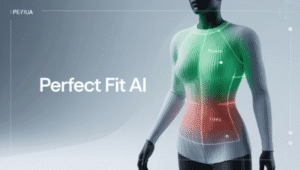
2. Fit Prediction Models
Fit is one of Stitch Fix’s biggest AI advantages.
Models predict:
- how an item will fit a specific body
- likelihood of return
- comfort level
This drastically reduces return rates.

3. Recommendation Ranking Models
AI scores thousands of items per customer based on:
- predicted satisfaction
- predicted keep probability
- stylist compatibility
- inventory availability
Only top-ranked items are shown to stylists.
Human Stylists: The Critical Missing Piece
This is what makes Stitch Fix unique among ai case studies.
AI does not replace stylists.
Instead, it:
- narrows options
- removes poor matches
- highlights high-confidence picks
- explains why items are suggested
Stylists then:
- apply intuition
- consider emotional tone
- personalize notes
- adjust for context
This human-in-the-loop system creates trust.
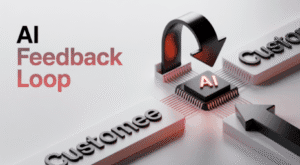
Feedback Loops That Make the System Smarter
Every decision feeds back into the system.
When a customer:
- keeps an item
- returns it
- leaves feedback
The AI updates:
- the customer profile
- the product model
- stylist guidance rules
This continuous learning is why Stitch Fix’s personalization improves with time — a hallmark of strong artificial intelligence case studies.

Inventory & Supply-Chain Intelligence
Stitch Fix also uses AI beyond styling.
AI helps:
- forecast demand by size and style
- avoid overproduction
- optimize warehouse allocation
- manage markdowns
- reduce unsold inventory
This operational intelligence improves margins and sustainability.
Business Impact of AI-Driven Personalization
Customer Satisfaction
- Customers feel “understood”
- Less decision fatigue
- Higher trust
Retention & Loyalty
- Personalized experiences increase stickiness
- Repeat orders rise
Operational Efficiency
- Lower returns
- Better inventory planning
- Faster styling decisions
This proves that personalization is not just UX — it’s a business strategy.
Challenges & Limitations
A realistic ai case study must include constraints.
1. Cold-Start Problem
New customers have limited data.
2. Subjectivity
Style preferences can change suddenly.
3. Cost Structure
Human stylists add operational complexity.
4. Explainability
AI recommendations must be understandable to stylists.
Stitch Fix manages this through:
- gradual learning
- human oversight
- transparent recommendation logic
What This AI Case Study Teaches Other Industries
Stitch Fix offers lessons applicable far beyond fashion.
Key takeaways:
- AI works best when paired with humans
- Personalization is a long-term learning problem
- Behavioral data beats stated preferences
- Trust grows when users feel understood
- Hybrid AI systems scale empathy
These principles are now studied across ai education case studies, healthcare personalization, and customer experience design.
Final Thought
Stitch Fix proves that AI doesn’t have to feel cold or robotic.
In this artificial intelligence case study, AI becomes a silent partner — learning, refining, and empowering humans to deliver deeply personal experiences at scale.
The future of retail isn’t automated.
It’s intelligently human.
Internal Link Suggestions
- [Internal Link: “Read our breakdown of AlphaFold — AI’s biggest science breakthrough.”]
External Links
- [External Link: “american express ai”]