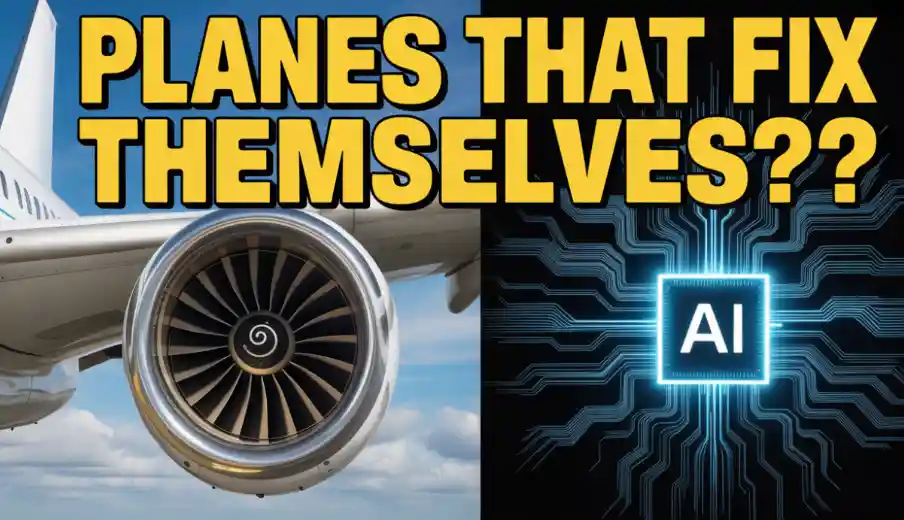
Ai case study: Aircraft maintenance is not just a technical requirement.
It is a matter of life, safety, trust, and billions of dollars.
In commercial aviation, a single unexpected equipment failure can ground an aircraft, delay thousands of passengers, disrupt airline schedules, and cost millions. Traditional maintenance methods rely on fixed schedules and manual inspections — effective, but far from optimal.
This is where artificial intelligence enters the picture.
Among modern ai case studies, Airbus stands out as one of the most advanced artificial intelligence case studies in industrial safety and operations. Airbus uses AI to predict failures before they happen, reduce downtime, and raise safety standards across global fleets.
This blog explores how Airbus uses AI for predictive maintenance, why it matters, and what this teaches us about the future of AI in critical industries.
Why Aircraft Maintenance Is One of the Hardest Problems in Aviation
Modern aircraft are incredibly complex.
A single commercial jet contains:
thousands of sensors
millions of parts
highly stressed mechanical systems
advanced avionics
engines operating at extreme temperatures
Even a small fault in one component can cascade into larger issues.
Traditional challenges included:
Unexpected component failures
Excessive preventive inspections
Aircraft grounded unnecessarily
High labor and spare-part costs
Difficulty detecting early-stage wear
Airbus needed a smarter, data-driven way to maintain aircraft — and this is where AI became essential.
This challenge makes Airbus one of the most compelling ai case studies in heavy engineering.
Traditional Maintenance vs AI-Driven Predictive Maintenance
Traditional Maintenance
Fixed inspection intervals
Manual diagnostics
Reactive repairs after faults
Conservative schedules “just in case”
High downtime
Predictive Maintenance (AI-Driven)
Condition-based monitoring
Continuous sensor analysis
Failure prediction before breakdown
Maintenance only when needed
Reduced downtime and cost
Airbus realized that not all components age the same way, and AI is uniquely capable of understanding these differences.
Airbus’s AI Vision for Smarter Aviation
Airbus does not treat AI as a single tool.
Instead, it built an AI ecosystem that integrates:
aircraft sensor data
machine learning models
maintenance logs
historical failure records
environmental data
operational patterns
The goal was clear:
Predict problems before they affect safety or operations.
This mindset places Airbus among the most advanced artificial intelligence case studies in aerospace.
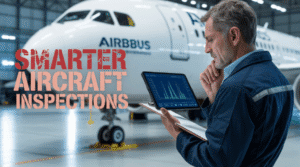
How Airbus’s Predictive Maintenance System Works
1. Data Collection from Aircraft Sensors
Each Airbus aircraft continuously generates massive volumes of data, including:
engine temperature and pressure
vibration levels
hydraulic system data
fuel efficiency metrics
electrical system readings
flight phase behavior (takeoff, cruise, landing)
This raw data is transmitted after flights or in near-real time.
2. Data Processing & Cleaning
Raw aviation data is noisy and complex.
AI systems clean and normalize:
sensor anomalies
missing values
inconsistent readings
environmental distortions
Only high-quality data moves forward.
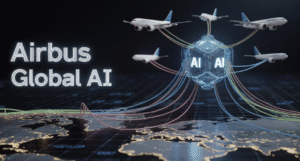
3. Machine Learning Models for Pattern Recognition
This is where the ai case study becomes powerful.
AI models are trained to:
detect abnormal patterns
compare behavior across fleets
recognize early signs of degradation
identify correlations invisible to humans
For example:
a subtle vibration + temperature change
repeated small deviations over many flights
abnormal performance under specific weather conditions
Humans might miss these signals.
AI does not.
4. Failure Prediction & Remaining Useful Life (RUL)
Airbus’s AI predicts:
what component might fail
how soon it could fail
how urgent the issue is
This allows airlines to:
schedule maintenance proactively
order spare parts in advance
avoid emergency repairs
prevent cascading failures
This shift from reaction to prediction defines the value of this artificial intelligence case study.
From Detection to Decision: AI in Maintenance Operations
AI insights are not just dashboards.
They integrate directly into:
maintenance planning systems
airline operations
spare-parts logistics
engineering decision workflows
The result:
fewer AOG (Aircraft on Ground) events
optimized maintenance windows
better workforce planning
faster turnaround times
This level of integration is rare even among top ai case studies.
Operational & Financial Impact
Airbus’s AI-driven maintenance delivers measurable benefits.
Cost Reduction
Fewer unnecessary inspections
Reduced spare-parts waste
Lower emergency repair costs
Downtime Reduction
Aircraft stay in service longer
Fewer flight cancellations
Higher fleet availability
Efficiency Gains
Maintenance teams focus on real issues
Airlines operate more predictably
Resources are used optimally
These gains translate directly into profitability.
Safety Improvements Through AI
Safety is the most important outcome.
Predictive maintenance improves safety by:
detecting faults earlier
preventing in-flight failures
reducing human diagnostic errors
identifying rare but dangerous patterns
AI does not replace engineers.
It augments human judgment with continuous vigilance.
This makes Airbus a gold-standard ai case study in safety-critical systems.
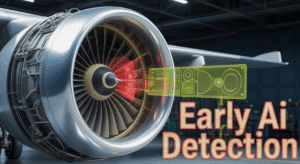
Challenges & Limitations
A realistic artificial intelligence case study must acknowledge challenges.
1. Data Quality
AI is only as good as the data it receives.
2. Model Explainability
Engineers must trust AI predictions. Black-box models require careful validation.
3. Regulatory Compliance
Aviation authorities demand:
transparency
certification
auditability
4. Integration Complexity
Legacy systems must work alongside modern AI platforms.
Airbus addresses these challenges with:
human-in-the-loop systems
rigorous validation
regulatory collaboration
What This AI Case Study Teaches Other Industries
Airbus’s success applies far beyond aviation.
Industries that can learn from this ai case study include:
manufacturing
railways
energy
shipping
healthcare equipment
automotive
Core lessons:
AI excels at early anomaly detection
Prediction beats prevention schedules
Real-time data is a competitive advantage
Human + AI collaboration is essential
Safety-critical AI must be explainable
These principles also appear in advanced ai education case studies, where AI supports — not replaces — human expertise.
Final Thought
Airbus proves that AI is not just about personalization, ads, or recommendations.
In this artificial intelligence case study, AI becomes a guardian — quietly watching, predicting, and protecting.
By elevating aircraft maintenance through AI, Airbus has:
reduced costs
minimized downtime
improved safety
reshaped aviation operations
This is the future of AI in the physical world.
Internal Link Suggestions
- [Internal Link: “Read our breakdown of AlphaFold — AI’s biggest science breakthrough.”]
External Links
- [External Link: “Official Tesla FSD Overview”]
- [External Link: “MIT Deep Learning for Self-Driving Cars Lab”]
- [External Link: “NHTSA Reports on Autonomous Vehicle Safety”]