The fashion industry moves faster than almost any other global market. Trends rise and die within weeks. Consumer expectations shift daily. Producing the right item at the right time can skyrocket sales — but one wrong prediction can leave millions in unsold inventory.
This is where AI changes everything.
And among all ai case studies in retail, Zara stands out as one of the most successful and data-driven transformations of the decade.
This detailed artificial intelligence case study explores how Zara uses AI to predict trends, manage inventory, reduce waste, and respond to consumer desires faster than any traditional fashion brand.
Why Zara Needed AI
Fashion is unpredictable.
Human trend forecasters used to rely on:
- runways
- magazines
- intuition
- seasonal buying patterns
- regional fashion reports
But the internet destroyed predictable cycles.
TikTok trends go global in days.
Micro-aesthetics appear overnight.
Seasonal shopping is fading as consumers want constant variety.
Even giant brands struggled to keep up.
Zara needed a system that could:
- track millions of signals
- identify meaningful patterns
- predict demand by region
- minimize overstock
- avoid shortages
- keep fast fashion truly fast
AI became the only viable answer.
The Problem: Fast Fashion Was Outpacing Human Forecasting
Traditional forecasting has limitations:
❌ Long design cycles
By the time data was analyzed, trends had already changed.
❌ Overproduction
Brands often produced huge quantities based on guesses.
❌ Slow feedback
Consumer behavior changed faster than manual analysis.
❌ Regional variation
One trend might explode in Barcelona but flop in Mumbai.
Zara needed speed. Precision. Real-time insights.
This is exactly the kind of transformation that separates average businesses from breakthrough ai case studies.
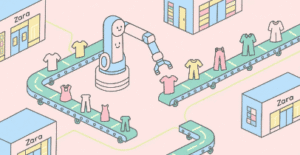
Zara’s AI Ecosystem — A Deep Look
Most articles describe Zara’s AI as “trend prediction,” but the system is much more powerful.
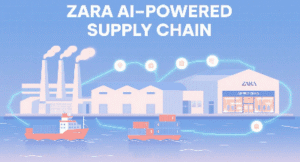
Zara built an end-to-end AI pipeline covering:
- demand forecasting
- trend analysis
- sales prediction
- inventory optimization
- supply chain acceleration
- pricing intelligence
- store-level stock allocation
This makes Zara one of the strongest real-world artificial intelligence case studies in retail.
How Zara’s AI Works Behind the Scenes
1. Data Collection Layer
Zara collects massive data signals from:
- purchase patterns
- in-store foot traffic
- online browsing
- abandoned carts
- social media (Instagram, TikTok, Pinterest)
- competitor launches
- influencer trends
- weather forecasts
- regional sales history
- customer feedback given to store staff
Each data source feeds into Zara’s predictive engine.
2. Pattern Recognition Layer
Machine learning models search for correlations like:
- rising interest in specific colors
- sudden drops in denim purchases
- increased searches for a type of dress
- items consistently paired together in carts
- trends that spike only in certain demographics
This is where Zara moves beyond human intuition.
3. Trend Forecasting Layer
Neural networks model “fashion trajectories,” predicting how:
- long trends will last
- fast trends will rise or decay
- micro-trends might evolve into macro-trends
- regional preferences will diverge or converge
4. Demand Forecasting Layer
This is the core of Zara’s AI strategy.
The system predicts:
- how many units to produce
- which sizes will sell fastest
- how many items should go to each store
- when replenishment is needed
- when a trend is dying
This eliminates both stockouts and overstock, the two biggest profit killers.
Real-Time Consumer Behavior Modeling
This part is crucial.
Unlike traditional fashion companies that rely on quarterly or seasonal forecasts, Zara’s AI updates constantly.
The model reacts to:
- sudden viral trends
- weather changes
- celebrity outfits
- regional festivals
- store-specific demand bursts
Example:
If crop tops spike in Madrid but decline in Paris, the AI redirects inventory in hours — not weeks.
This agility is what makes Zara unstoppable.
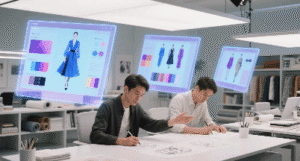
AI + Human Designers: The Collaboration Model
Zara does not replace designers with machines.
Instead, AI:
- filters irrelevant trends
- highlights high-potential ideas
- identifies color palettes gaining traction
- suggests fabrics based on seasonality
- analyzes what customers complain about
Designers then use these insights to create better products faster.
This is very similar to what ai education case studies show:
AI does the grunt work → humans do the creative work.
Inventory Optimization — Zara’s Massive Competitive Edge
Inventory is where fashion brands make or lose money.
Zara’s AI-driven inventory management is legendary.
AI determines:
- how much each store should stock
- which items need emergency restocking
- when a trend is fading
- which products should move to online-only
- when to stop producing an item entirely
This system:
✔ reduces waste
✔ boosts profits
✔ makes stores feel “always fresh”
✔ supports Zara’s 2-week design-to-shelf model
This is why this ai case study is taught in business schools.
Sustainability Gains Through AI
Fast fashion is often criticized for environmental impact.
Zara uses AI to reduce that impact.
AI reduces:
- overproduction
- unsold inventory
- textile waste
- unnecessary shipments
- warehouse pressure
AI increases:
- production accuracy
- sell-through rates
- sustainable material planning
It’s not perfect — but it’s a meaningful improvement backed by data.
Impact on Profitability & Customer Satisfaction
Thanks to AI, Zara consistently sees:
✔ Higher full-price sell-through
Items sell without needing heavy discounts.
✔ Lower operational costs
Better forecasting = fewer mistakes.
✔ Faster design cycles
AI cuts weeks out of the process.
✔ Better regional targeting
Each store feels tailored to local taste.
✔ Higher customer satisfaction
Customers feel Zara “never misses the trend.”
Zara’s AI system is not just a tool — it’s a business model.
What This AI Case Study Teaches Us
Regardless of whether you study fashion, logistics, or ai education case studies, Zara proves three timeless lessons:
1. AI wins when it has constant real-world feedback.
Data from stores → better forecasting → smarter production.
2. AI enhances creativity instead of replacing it.
Designers still lead. AI just clears the noise.
3. AI-driven inventory is the future of retail.
The brands that predict demand best will dominate.
Zara turned AI into a strategic weapon — and changed retail forever.
Internal Link Suggestions
- [Internal Link Suggestion: “Read our in-depth AI retail transformation guide.”]
External Links
- [External Link: “Official Inditex Technology & Innovation Overview”]
- [External Link: “McKinsey Report on AI in Fashion & Retail”]
- [External Link: “Harvard Business Review: Zara’s Data-Driven Model”]